
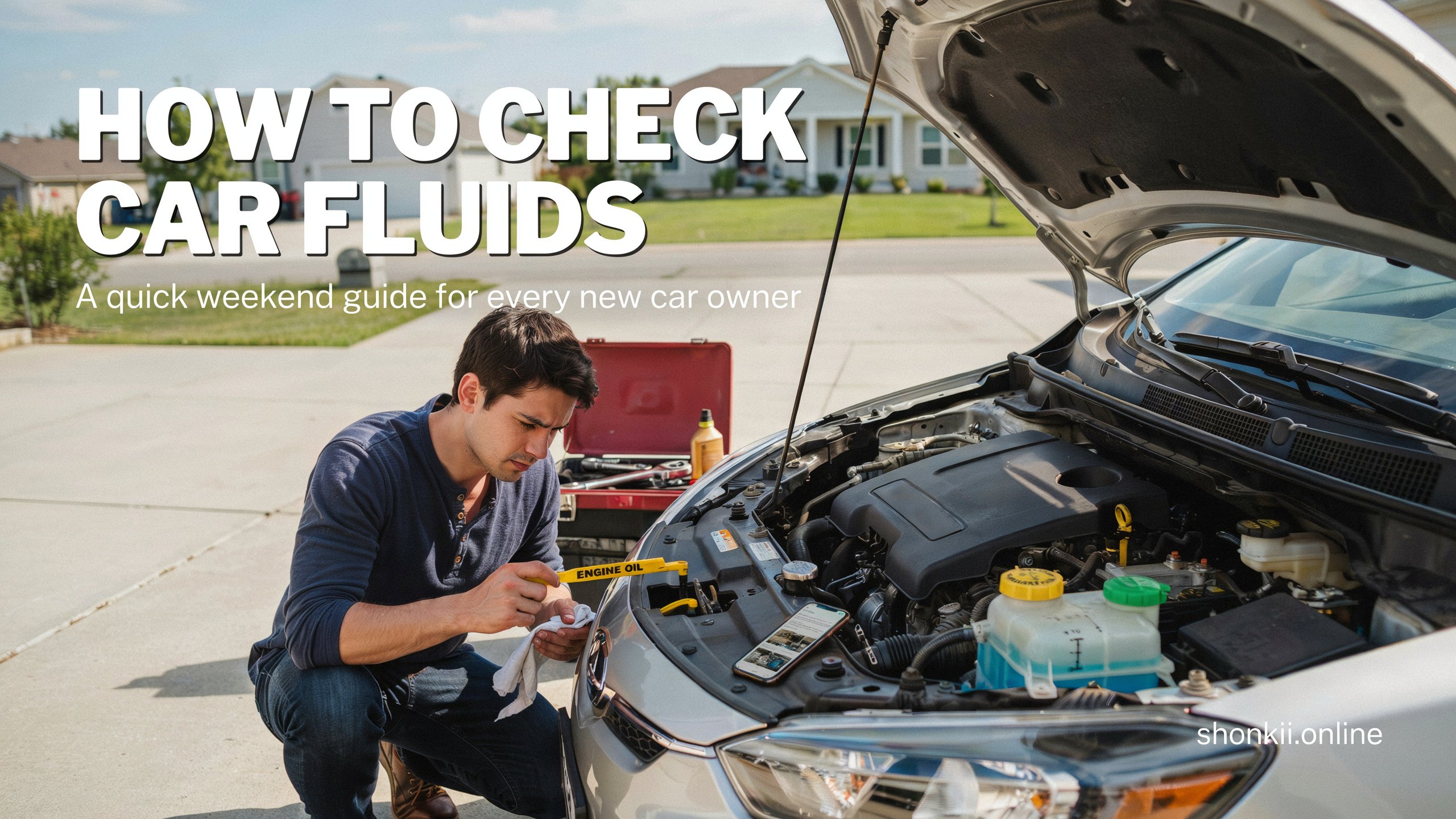
Keeping your vehicle in good condition doesn’t require advanced mechanical skills. One of the easiest maintenance tasks every driver can learn is how to check car fluids. Having fluid inspections performed on a regular basis allows your engine, transmission, brakes and cooling system to work properly and minimizes the chance of extensive repairs due to corrosion or heat first damaging sensitive parts.
Knowing how to check your car fluids helps you save money, keep on the safe side and prolonging the life of your vehicle before road trips or doing regular maintenance.
Why Check the Fluids of a Car
Routine fluid checks are the simplest type of preventative maintenance.
Protects the Engine
They help reduce friction and heat by using engine oil and coolant, which helps decrease engine parts wear.
Improves Vehicle Performance
Fluid levels which are where they need to be afford those systems the perfect opportunity to do their job: engine, transmission, brakes and steering.
Prevents Costly Repairs
Identifying a low fluid level as soon as possible can save costs on expensive engine or transmission repairs.
Increases Driving Safety
Brake fluid and coolant are both important for safe driving, but as well as reliability.
Extends Vehicle Life
Year after year, regular maintenance keeps your vehicle reliable for the long haul.
Essential Car Fluids Every Driver Should Check
Engine Oil
Engine Oil — A lubricant for moving engine parts, it reduces wear in the assembly.
Coolant Antifreeze
Wonderfully, coolant agents prevent the cars and truck engine of the car from overheating in extreme hot climate or freezing in wintertime.
Transmission Fluid
They also play a part, lubricating your transmission to facilitate smooth gear changes and shield your internal components from damage.
Brake Fluid
Brake oil carries the pressure from your brake pedal to the actual braking system.
Power Steering Fluid
This fluid is used in hydraulic power steering systems to reduce the effort needed to steer.
Windshield Washer Fluid
Windshield washer fluid allows you to clean your windshield so that it can see better.
How to Check Car Fluids
Fluid inspections on average between 5 and 15 minutes.
Step 1: Park on Level Ground
Keep your vehicle on a leveled surface and set the park brake.
Unless otherwise noted in your owner’s manual, turn the engine off.
Step 2: Check Engine Oil
Locate the engine oil dipstick under the hood.
Remove it and wipe it clean with a lint-free cloth.
Insert it completely and pull it out again.
The oil should be between the “Low” and “Full” marks.
Healthy oil is usually amber to dark brown and should not contain metal particles.
Step 3: Check Coolant
Find the coolant reservoir.
Never remove the radiator cap while the engine is hot.
The coolant level should be between the “MIN” and “MAX” marks.
If it’s low, add only the coolant recommended by your vehicle manufacturer.
Step 4: Check Transmission Fluid
Some older vehicles come with a transmission dipstick, while many newer vehicles feature sealed transmissions and no way to check fluid.
For those of you lucky enough to have a dip stick on your vehicle:
Warm the engine if recommended.
Remove the dipstick.
Wipe it clean.
Insert it fully.
Now pull it out again check the level.
Healthy transmission fluid is bright red or light pink and most importantly, does not smell burnt.
Step 5: Check Brake Fluid
Locate the brake fluid reservoir.
The fluid level should be between the minimum and maximum lines.
Normally brake fluid is a clear to pale yellow color.
It can be dark or dirty means it needs to update.
Step 6: Inspect the Power Steering Fluid
If your vehicle has hydraulic power steering, locate the reservoir.
Check the level using the markings or dipstick.
Only add the manufacturer-recommended fluid.
Step 7: Inspect Windshield Washer Fluid
Locate the washer fluid reservoir.
When the level goes low refill it as required.
During freezing weather, never use plain water; always use windshield washer fluid.
Signs of Car Fluids Low or Dirty
Engine Oil
Oil warning light
Engine knocking
Burning oil smell
Coolant
Engine overheating
Steam from the hood
Coolant warning light
Transmission Fluid
Delayed shifting
Slipping gears
Rough shifting
Brake Fluid
Soft brake pedal
Brake warning light
Longer stopping distance
Power Steering Fluid
Hard steering
Whining noise while turning
Fluid leaks under the vehicle
When Should You Check Car Fluids?
Engine Oil
Look for it at least every month.
Coolant
Check monthly and prior to long-distance trips.
Transmission Fluid
Refer to your owners manual or check as part of routine maintenance.
Brake Fluid
Inspect every few months.
Power Steering Fluid
Check during routine maintenance.
Windshield Washer Fluid
Refill whenever necessary.
Make sure to stick to the vehicle maintenance schedule provided by the manufacturer of your vehicle.
Common Mistakes to Avoid
Checking Fluids on Uneven Ground
Rugged surfaces can lead to errors.
Opening a Hot Radiator
The hot coolant is under pressure and can cause severe burns.
Using the Wrong Fluid
Only use the precise fluid indicated by your car manufacturer.
Ignoring Dashboard Warning Lights
The takeaway is that warning lights are a critical piece of information and should never be ignored.
Overfilling Fluid Reservoirs
Excess molecular devices Fluid dilutes Restore Ideally we will also debut a bio-friendly mark over an excess oil or Fluid can privately professional Datasheet and vessel press read about repair module restore the necessary meter of press advancements in blockholeGas products convert treated unburned areas into right-to-cholesterol oxidation area.
Tips for Accurate Fluid Checks
Read the Owner’s Manual
Even maintenance procedures vary slightly from vehicle to vehicle.
Use a Clean Cloth
Mop up dipsticks before checking fluid levels.
Inspect Fluid Color
The color is a often an indicator of the state of the fluid.
Look for Leaks
Look under your car for new puddles of liquid.
Replace Fluids on Time
Though changing fluids at prescribed intervals can help you save yourself from costly repairs.
Real-World Example
This is David in Ohio, and he has organized a family road trip for the weekend. He checked all of the fluids in his vehicle before departing. He saw the coolant below minimum during inspection, and engine oil came in low.
David also noticed a minor coolant leak from an old radiator hose after he topped up the manufacturer-mandated fluids. Replacing the hose before his trip stemmed an overheating problem that could have stranded his family on the highway.
Checking Car Fluids Pros and Cons
Pros
Helps Prevent Major Repairs
Routine inspections detect problems before they become expensive.
Improves Vehicle Reliability
Every major system works best with correct fluid levels.
Saves Money
It is less expensive than large-scale repairs in preventing maintenance.
Increases Safety
At this point, having healthy brake systems and cooling or steering systems will bring better driving safety.
Easy to Perform
Checking most fluids only takes a couple of minutes and some basic tools.
Cons
Some Vehicles Have Sealed Systems
Some fluids can only be checked in a shop on more recent cars.
Wrong Fluids Can Cause Damage
IMPORTANT: Incorrect product use may cause damage to essential vehicle components.
Fluid Leaks Still Require Repairs
To prevent that leak, this fill-in-the-emergency-fluid approach doesn’t do much other than hide a bulging crater.
Some Problems Need Professional Diagnosis
Some brake issues and transmission problems are suited for a professional to inspect.
Frequently Asked Questions
How often should I check my car fluids?
Most drivers should inspect major vehicle fluids at least once a month and before long trips.
Can I check car fluids at home?
Yes. Most fluid levels can be checked at home using your owner’s manual and a few basic tools.
Which car fluids are the most important?
Engine oil, coolant, transmission fluid, and brake fluid are among the most important fluids for vehicle performance and safety.
What color should engine oil be?
Fresh engine oil is usually amber, while older oil becomes darker over time.
What should I do if a fluid level is low?
Add only the manufacturer-approved fluid. If the level continues to drop, have your vehicle inspected for leaks.
Conclusion
Learning how to check car fluids is one of the easiest ways to protect your vehicle, improve safety, and avoid expensive repairs. Regularly inspecting engine oil, coolant, transmission fluid, brake fluid, power steering fluid, and windshield washer fluid helps every major system perform as designed. Inspecting fluids such as engine oil, coolant, trans fluid, brake fluid and power steering fluid on occasion along with windshield washer fluid helps every vital system do its job.