
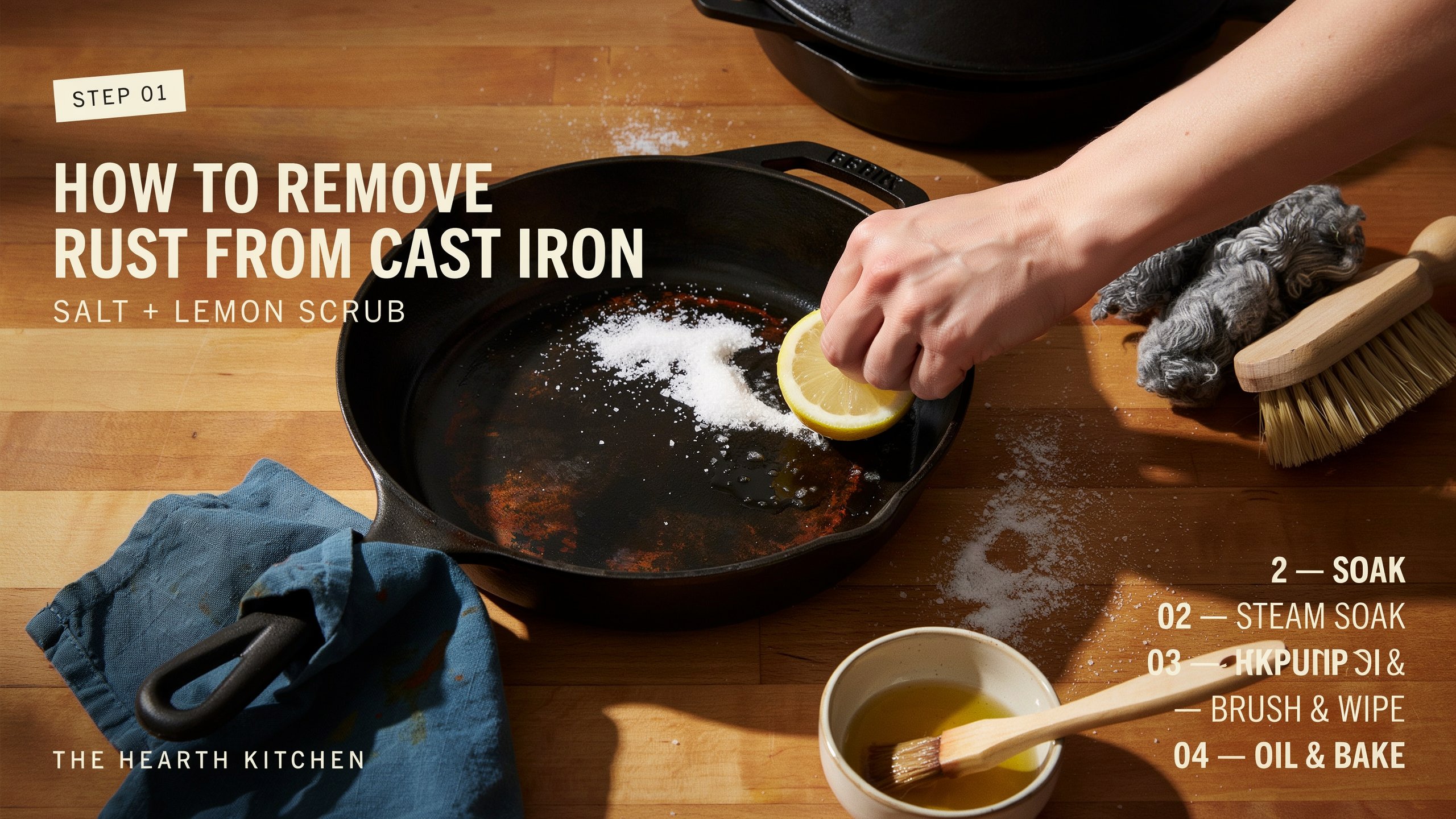
Cast Iron is a beloved cooking tool and workhorse, able to withstand the rigors of use for decades if properly taken care of. Whether its a cast iron Skillet, Griddle, Dutch oven or even an outdoor tool, with a little TLC it can keep on going strong. However, there one common problem folk face with their cast iron rust.
The good news is, a bit of rust does always mean your cast iron is as good as dead. In most cases, even if your cast iron is heavily rusted you can still bring it back to life with a bit of elbow grease and the right know-how.
Why Does Cast Iron Rust ?
Unlike Stainless Steel, cast iron doesnt come with a built in protective coating to stop moisture from getting to the metal.
Rust forms when :
- Your cast iron is left exposed to water for too long
- The seasoning layer wears off
- Its stored in a damp environment
- You dont dry it properly after washing
And its not just a bit of water thats the problem either – a small amount of moisture can eventually turn to rust if you dont protect the surface.
Can Rusted Cast Iron Be Saved ?
Most of the time, yes.
Lots of people chuck their rusted cast iron in the bin because they think its beyond saving, but the truth is surface rust is usually pretty easy to get rid of.
Even if your cast iron has got a pretty bad case of rust you can still bring it back to life – the key is to get the rust off thoroughly, and then protect it to stop it from coming back.
The Stuff You Need
Before you start youre going to need to get your hands on the following bits and bobs :
- Steel wool or a metal scrubber
- Dish soap
- Warm water
- White vinegar
- Baking soda (optional)
- Paper towels or a clean cloth
- Cooking oil
- Your oven (for cookware restoration)
Youll be glad to know that most of these household items you should already have knocking around somewhere.
Method 1 – Remove Light Rust with Steel Wool
If the rust is just a small bit of surface rust you might be able to get away with a simple scrubbing job.
Step 1 : Give it a good wash
Rinse the cast iron under warm water, and apply a small amount of dish soap to help loosen the rust.
Note – dont go too crazy with the soap, a little is just fine – too much can actually cause more harm than good
Step 2 : Get to work with the steel wool
Use some firm pressure and scrub in a circular motion to get the rust off. Continue doing this until the rust is gone and there is a bit of bare metal showing.
Step 3 : Rinse off the loosened bits
Wash away any of the loose rust and this stuff that came off, and make sure to check the surface to make sure all the rust is gone. If not, repeat the scrubbing process.
Step 4 : Dry it and get it ready for re-seasoning
Dry the cast iron completely using paper towels or a clean cloth, making sure to get into all the nooks and crannies. If you want to get extra thorough, pop it onto a low heat burner in the stove for a few minutes to make sure any hidden moisture is gone for good.
Method 2 – The Vinegar Soak for Really Bad Rust
If the rust is so bad its got a real grip on the metal, a vinegar soak can be just the thing to loosen it up.
Step 1 : Mix up the vinegar solution
Grab a big enough container to hold your cast iron, and mix equal parts white vinegar and water in it.
Step 2 : Leave it to soak
Submerge your cast iron in the solution and leave it to soak for a few hours, checking on it from time to time to make sure it doesnt get too wet.
Step 3 : Scrub it away
After a few hours, get the cast iron out and use steel wool to scrub away the loosened rust. You should find this comes off much easier now.
Step 4 : Rinse and dry
Rinse the cast iron with clean water, and make sure to dry it thoroughly to prevent flash rust from forming.
Dealing with Flash Rust
Flash rust is a real bugbear for cast iron owners – its that thin layer of rust that can appear just after youve cleaned your cast iron. And its because the iron reacts so quickly with the moisture in the air.
If you do get flash rust :
- Give it a good scrub with some steel wool
- Apply some oil straight away to seal it in
- Make sure to get the oil on all the areas youve cleaned so its properly protected.
The sooner you re-season the cast iron the less likely you are to run into the problem of flash rust.
How to Reseason Cast Iron
Removing rust is great, but it does often mean stripping away the protective seasoning layer. Which is why you need to reseason it afterwards.
Step 1 : Give it a good coat of oil
Grab a thin layer of oil (you can use vegetable, canola, grapeseed or flaxseed) and spread it evenly across the whole surface of the cast iron. Make sure to cover every bit of it – the handle, the bottom and all the sides.
Step 2 : Wipe away the excess
Use a clean cloth to wipe away any of the excess oil thats dripping off, so it only has a thin, even layer.
Step 3 : Pop it in the oven
Place the cast iron upside down in your oven, and set it for 450F (232C) for an hour. Put some foil on the lower rack to catch any drips.
Step 4 : Let it cool
When the time is up, turn off the oven and let it cool completely before using your cast iron again .Turn the oven off and let the cast iron sit for a while before you touch it, or better yet, let it cool down in the oven itself
This process of letting it sit for a bit is what helps you create a really durable protective seasoning layer that’s going to last.
How You Can Stop Rust From Coming Back in the First Place
Now that your cast iron is all fixed, the next thing to do is take care of it properly to keep rust at bay for years to come.
Dry It Out as Soon as You Finish Washing
For goodness sake – don’t ever let your cast iron air dry. Just dry it out thoroughly after giving it a good clean.
Give it a Quick Coating of Oil
Right after each use, give it a light coating of oil and that’ll help keep the seasoning nice and healthy.
Store it Somewhere Dry
Avoid putting it in any damp places like those fancy kitchen cabinets or an outdoor storage shed. Moisture is pretty much the number one cause of rust.
Don’t Let it Soak for Too Long
Don’t get the cast iron wet and then just leave it sitting there in water all day either. Wash it, dry it, and put it away pronto.
Common Pitfalls to Watch Out For
Don’t Leave it Sitting in Water
Even a tiny bit of moisture can start rust forming.
Using Too Much Vinegar
Vinegar can be a good fix, but leaving it in there for too long can actually damage the metal.
Not Re-seasoning it After Cleaning
And for goodness sake, don’t skip the re-seasoning part. If you do, that rust is just going to come right back.
Storing it in a Damp Place
Storing it in a humid spot just gives rust a chance to build up and get all over the place.
When is It Time to Get Rid of It?
Most cast iron is easily restored to its former glory.
But there are cases where you’re just better off replacing it – such as if:
- It’s got deep cracks going on
- Bits are breaking off
- The metal itself is all warped and distorted
A little bit of surface rust isn’t usually enough to write off as lost cause, though.
The Bottom Line
Learning how to remove rust from cast iron is actually pretty handy, and can really help extend the life of all sorts of stuff – whether it’s cookware, tools or just some old outdoor furniture. And it’s usually pretty easy to fix just by using a bit of steel wool and a vinegar soak.
Now that you’ve got the rust all sorted, it’s time to get in the habit of keeping your cast iron dry, oiled and put away properly. With a bit of practice, you’ll be cooking and working with it for years to come.